Kitchen Knives Explained: How to Choose the Right Knife for Your Kitchen
Most kitchens end up with more knives than they actually use. A drawer full of specialty blades doesn’t make you a better cook — three well-chosen knives handle nearly everything, and the rest is often bought on impulse and left dull in a block. This guide covers how to actually choose kitchen knives: which ones are essential versus optional, Western versus Japanese, what steel and handle differences really mean for you, and what most home cooks buy but don’t need.
Quick answer: For most home kitchens, three knives cover the vast majority of tasks — a chef’s knife, a paring knife, and a bread knife. Everything past that (santoku, boning knife, cleaver, nakiri) is genuinely useful for specific tasks but optional, not essential. Choose Western steel if you want low-maintenance durability, or Japanese steel if you want a sharper edge and don’t mind sharpening more carefully and more often.
Essential Knives vs. Specialty Knives
Essential means a knife that covers a broad range of everyday tasks well enough that skipping it would genuinely limit what you can cook. Specialty means a knife built for one task that a home cook may or may not actually do often enough to justify owning a dedicated blade for it.
- Essential: chef’s knife, paring knife, bread knife.
- Specialty, useful for some cooks: santoku (an alternative to a chef’s knife, not an addition to one), boning knife (only needed if you break down raw meat or poultry yourself), cleaver (bone and joint work), nakiri (heavy vegetable prep).
The mistake isn’t owning specialty knives — it’s buying them before the essentials are covered, or buying a specialty knife for a task you do twice a year. A full breakdown of every kitchen knife type and what each one is actually for has its own dedicated guide.
If You Only Buy Three Kitchen Knives, Start Here
This is the order that actually matters, not a random top-three list.
- Chef’s knife (8 inches). Handles chopping, slicing, and mincing for the overwhelming majority of what happens on a cutting board. If you buy exactly one knife, this is it.
- Paring knife (3 to 4 inches). Covers the in-hand work a chef’s knife is too big and too curved for — peeling, trimming, deveining, hulling.
- Bread knife. The only knife on this list that a plain-edge blade genuinely can’t substitute for — the serration is what lets it saw through crust without crushing the loaf.
Everything else on the market is solving a narrower problem than these three already solve together. Add a santoku if you find an 8-inch chef’s knife unwieldy, or a boning knife if you actually break down whole birds — but not before these three are covered.
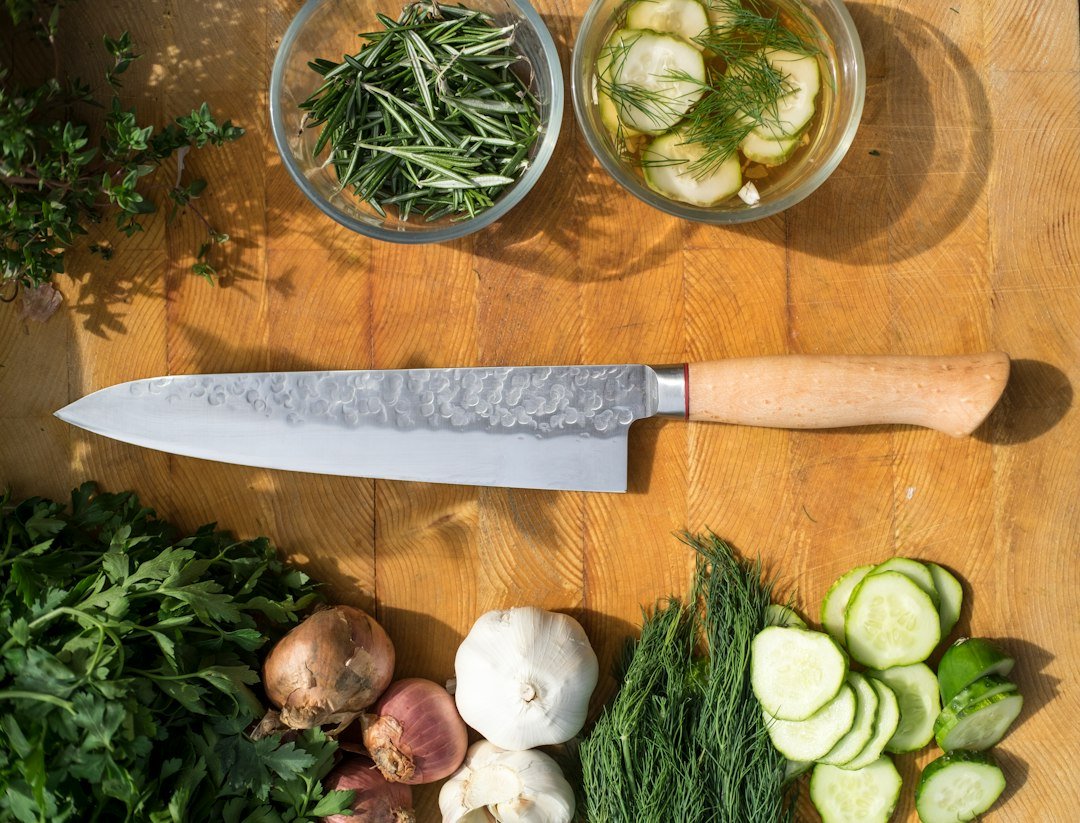
Example chef’s knife: Wüsthof Classic 8″ — forged X50CrMoV15 German stainless, HRC 58, 200mm blade, factory edge around 14° per side.
Where to buy: Wüsthof, or browse CityKnives’ Damascus chef knives once the category is stocked.
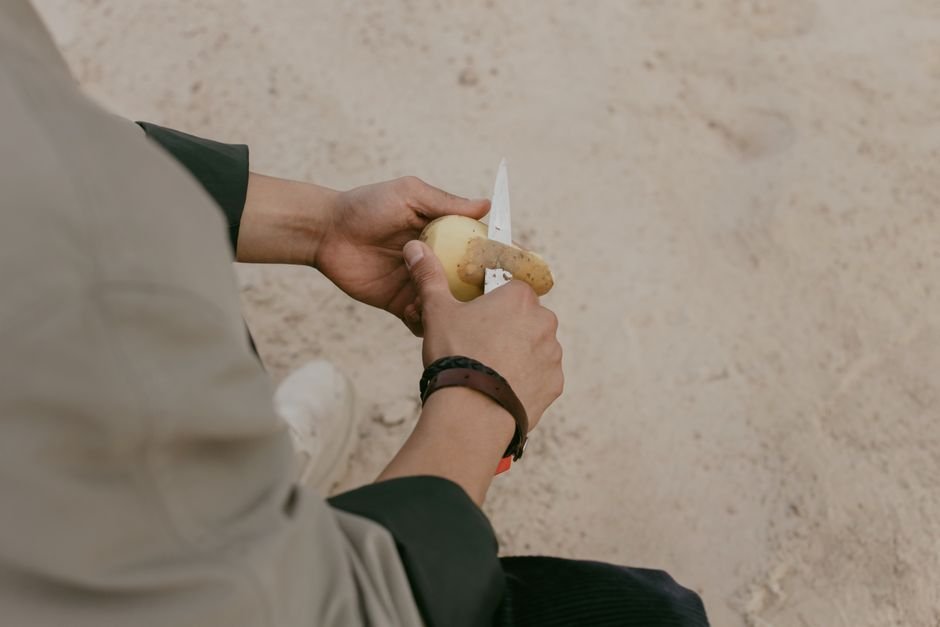
Example paring knife: Wüsthof Classic 3.5″ — same steel and hardness as the chef’s knife above, 90mm blade.
Where to buy: Wüsthof, or CityKnives’ paring knives category.
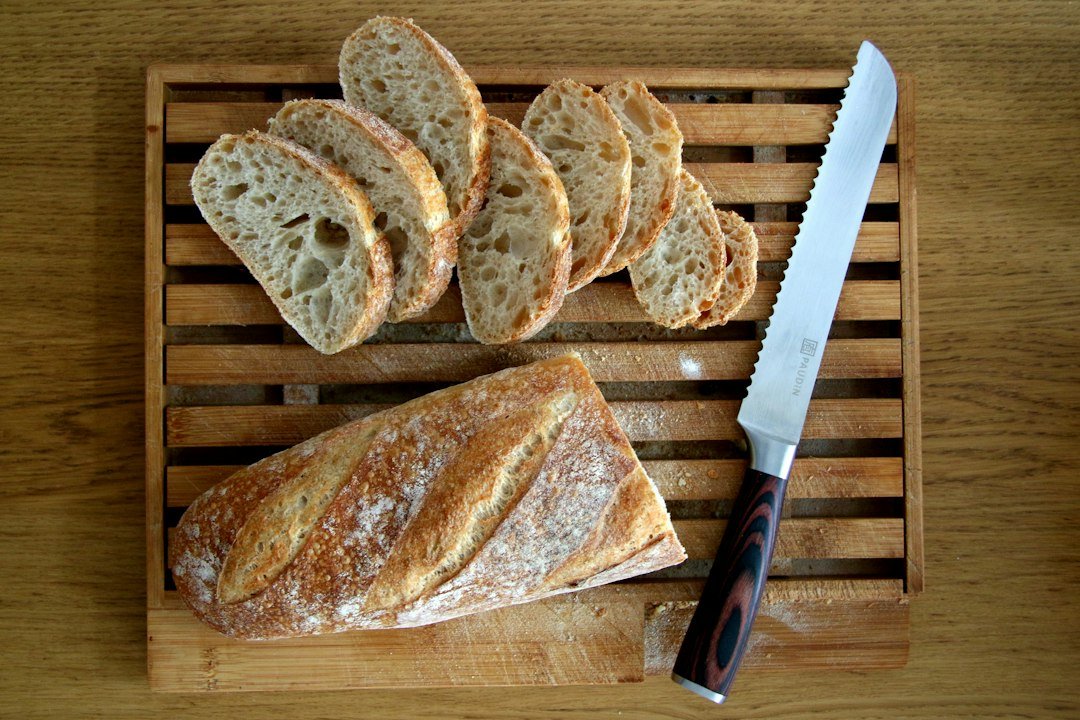
Example bread knife: Tojiro Classic Bread Knife 215mm — VG10 stainless core, san mai construction, HRC around 60.
Where to buy: Chef Knives to Go.
Blade Length: What Actually Matters
Longer isn’t automatically better. A longer chef’s knife (9 to 10 inches) cuts through wide produce like squash or melon in fewer strokes, but it’s harder to control and needs more counter clearance. A shorter one (6 to 7 inches) is easier to maneuver and store but works harder on anything wide.
For most home cooks, an 8-inch chef’s knife is the actual sweet spot — long enough for real cutting length, short enough to control without much practice. If your hands are small or you find 8 inches unwieldy, that’s the specific situation where a santoku (typically 6.5 inches, and flatter besides) genuinely earns its place over a second chef’s knife.
Western vs. Japanese Knives: Which Should You Buy?
This is a real trade-off, not just a style preference.
| Western | Japanese | |
|---|---|---|
| Typical hardness | HRC 54–58 | HRC 60–65 |
| Typical edge angle | ~20° per side | ~15° per side |
| Edge retention | Shorter between sharpenings | Longer between sharpenings |
| Chip resistance | More forgiving | More brittle |
| Sharpening effort | Lower — more forgiving of angle, works with a honing rod | Higher — needs steadier technique, less honing-rod-friendly |
Softer Western steel is the safer default if you don’t want to think much about maintenance — it tolerates an inconsistent angle better and a honing rod keeps it usable longer between real sharpenings. Harder Japanese steel rewards the extra care with a sharper edge that lasts longer, but it chips more easily if you’re rough with it (cutting on hard surfaces, twisting in a cut, dropping it) and needs more careful sharpening technique. How to actually sharpen either kind is worth reading before you decide, since the ongoing maintenance is part of the real cost of the Japanese option.
Neither is objectively better — a Western knife that’s slightly less sharp but forgiving is often the better real-world choice for someone who won’t sharpen carefully, while a Japanese knife rewards someone who will.
Steel Trade-Offs Beyond the Western/Japanese Split
Hardness (HRC) isn’t the only variable. Two more that matter for a buying decision:
- Carbon steel vs. stainless steel. Carbon steel can take a sharper edge and is often easier to sharpen, but it rusts far more easily and needs drying and light oiling after use. Stainless resists corrosion much better but usually can’t match carbon steel’s edge for edge-taking ease. Most home cooks are better served by stainless unless they’re specifically willing to maintain carbon steel.
- Clad vs. mono-steel construction. A knife with a hard steel core clad in softer stainless layers (common on mid-range Japanese knives) gets a hard, sharp edge with more corrosion resistance than a mono-steel knife of the same core hardness, at the cost of the cladding eventually wearing thin near the edge after years of sharpening.
Handle Fit and Balance: Why They Matter More Than Steel Type
A knife with excellent steel and a handle that doesn’t fit your hand will still feel worse to use than a mediocre blade with a comfortable grip — and you’ll notice the handle on every single cut, while you’ll rarely think about the steel directly.
- Grip shape and size. Hold the knife before buying when possible; a handle that’s too thick or too thin for your hand causes fatigue and reduces control regardless of blade quality.
- Balance point. A knife that balances near the bolster (where blade meets handle) feels more controlled for most cutting motions than one that’s heavily blade-weighted or handle-weighted.
- Handle material. Wood feels warmer and often more comfortable but needs more care to avoid cracking or absorbing moisture; synthetic materials like POM or G10 are lower-maintenance and more stable in humidity but can feel less premium.
- Full tang vs. partial tang. A full tang (the blade’s steel extends the complete length of the handle) is generally sturdier and better balanced than a partial tang, especially on larger knives that see harder use.
Edge Style and What It Means for Maintenance
- Plain edge: the standard straight edge on most chef’s, paring, and utility knives — sharpens on a whetstone the normal way.
- Granton edge (scalloped divots along the blade face): reduces food sticking to the blade on tasks like slicing cheese or thin protein, doesn’t change how the edge itself is sharpened.
- Serrated edge: built for crust and tough skins, but can’t be sharpened on a flat stone — it needs a tapered rod matched to the serration size, which is a real maintenance difference to factor into a buying decision if you’re choosing between a serrated and plain-edge knife for a borderline task like slicing tomatoes.
Buying a knife also means signing up for its maintenance routine — a knife you won’t realistically keep sharp is a worse investment than a slightly less premium one you’ll actually maintain.
What Most Home Cooks Don’t Need
- A full 15-piece knife block. Most of those slots go unused; a block is a storage solution more than a buying guide.
- A santoku in addition to a chef’s knife. They solve the same core problem — pick one, not both, unless you have a specific reason to want both styles on hand.
- A boning knife, if you never break down whole cuts of meat or poultry yourself. Pre-portioned meat from a butcher or store removes the task this knife exists for.
- A cleaver, for someone who doesn’t regularly cut through bone or thick joints. It’s a poor substitute for a chef’s knife on everyday slicing, so it only earns a place if the bone-cutting task is a real, recurring one.
- The most expensive knife in a given line “to be safe.” Past a reasonable quality threshold, handle fit and how well you maintain the edge affect your day-to-day experience more than marginal steel upgrades.
Frequently Asked Questions
Do I need a knife set, or should I buy knives individually?
Buying individually is usually the better value — most sets include several knives you won’t use to hit a price point, while buying the essential three individually lets you put the budget into quality where it actually matters.
Is a more expensive knife always sharper?
Not necessarily. Price often reflects materials, craftsmanship, and brand rather than out-of-the-box sharpness — a mid-range knife that’s properly maintained will out-cut an expensive one that’s neglected.
Should a beginner start with a Japanese knife?
It’s not off-limits, but a Western knife is generally the more forgiving starting point since it tolerates inconsistent sharpening technique better while you’re still learning. Moving to a Japanese knife once you’re comfortable sharpening is a reasonable progression, not a requirement.
Browse our full range of Damascus knives.