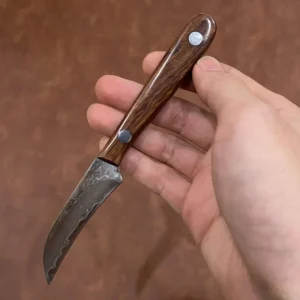
Paring Knives
A paring knife is for the jobs a chef knife is too big for — peeling, deveining, trimming fat, hulling strawberries, anything done close to your fingers instead of on a board.
Shape decides the job
Spear point — straight, symmetrical tip, the most versatile default. Bird’s beak — a curved, hooked blade built for peeling round produce and turning vegetables into decorative cuts. Sheep’s foot — flat edge, blunt tip, trades some piercing ability for more control on a board.
Size and grip matter more here
Most paring blades run 3–4 inches. Because you’re usually working in-hand rather than against a board, handle balance changes how controlled the cut feels more than it does on a chef knife — a front-heavy paring knife fights you on fine work.
Common questions
How is this different from a utility knife?
Size and task. A paring knife (3–4in) is for in-hand detail work; a utility knife (4–7in) covers board-based tasks too big for paring but too small for a chef knife.
Do I need more than one?
Most kitchens don’t. A bird’s beak is worth adding as a second if you peel or garnish a lot.
Guides: How to Sharpen a Damascus Steel Knife · How to Care for a Damascus Knife
Showing the single result