
Damascus Kitchen Knives, Honestly Specced
Chef, santoku, paring & utility knives — organized by type to help you find the right one.
There was never a good knife made of bad steel
- Ben Franklin

Understand the Blade
Learn how construction and materials can affect knife selection

Kitchen-Only Focus
Chef, santoku, paring, utility and gift sets

No Layer-Count Hype
Pattern doesn't determine performance, we explain why

Explore by Knife Type
Browse kitchen knife categories by type and purpose
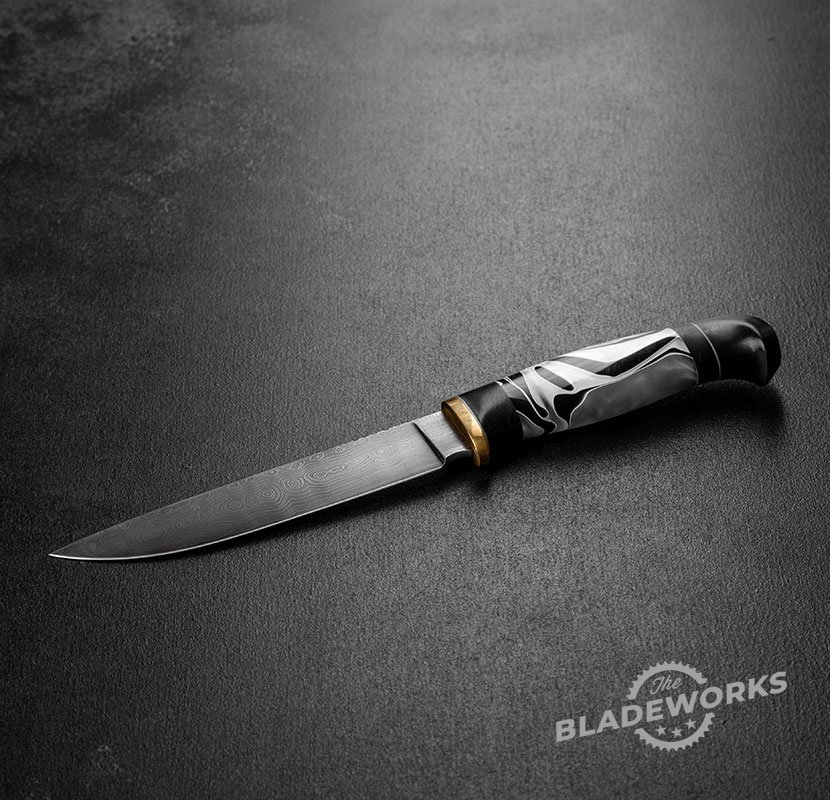
Pattern vs. Performance
The visible pattern alone does not determine how a kitchen knife will cut or retain its edge. Depending on the knife’s construction, relevant factors can include the edge or core steel, heat treatment, blade geometry, grind and edge design. These details must be assessed for the individual knife rather than inferred from its pattern.
Damascus Chef Knives
The knife you’ll reach for 80% of the time — everyday chopping, slicing, and dicing.
Damascus Knife Sets
Explore kitchen knife sets by set size and the types of knives included.
Damascus Gift Sets
Matched to how the recipient actually cooks, not just how the box looks.
Frequently Asked Questions
Straight answers before you buy.
The pattern alone does not determine performance. Consider the blade's construction, steel, heat treatment, geometry and edge design.
No. Layer count changes the visual pattern, not the cutting performance. What actually determines how a Damascus knife performs is the core steel type and its hardness rating, not how many layers it has.
The visible pattern alone doesn't confirm a blade's construction or quality. Genuine Damascus knives are made more than one way — some are pattern-welded all the way through, others use a patterned outer layer wrapped around a separate cutting core. The construction and core steel should be confirmed for the specific knife you're looking at.
Hand wash and dry immediately, never dishwasher. Avoid cutting frozen food or bone, and oil the blade if you won't use it for a while.