Utility Knives
A utility knife covers the gap between a chef knife and a paring knife — too big a job for paring, too awkward for a full chef blade. Sandwiches, small produce, cheese, and anything on the smaller end of a cutting board lands here.
Straight edge or serrated
Straight edge handles clean push-cuts on firmer food. Serrated grips soft-skinned produce like tomatoes without crushing the skin before the blade bites — worth choosing if your kitchen doesn’t already have a dedicated serrated blade for that job.
Sizing it
4–7 inches: long enough for light board work, short enough to still use in-hand for some tasks. It’s the blade most people don’t realize they’re missing until they own one.
Common questions
Do I need this if I already own a chef and a paring knife?
Not strictly, but it tends to become the most-reached-for third knife once people have one — it covers the middle ground both other blades handle poorly.
Serrated or straight edge?
If you already have a bread knife, go straight edge. If you don’t, a serrated utility knife doubles as a light-duty bread and tomato knife.
Guides: Japanese Damascus Knives · How to Sharpen a Damascus Steel Knife
Showing all 4 results
-
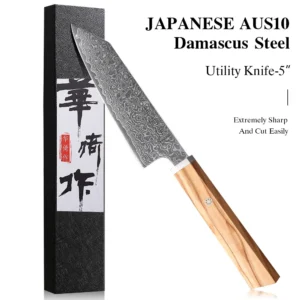
5-Inch Damascus Bunka Knife — AUS-10 Core, Olivewood Handle
$ 28 Add to cart -
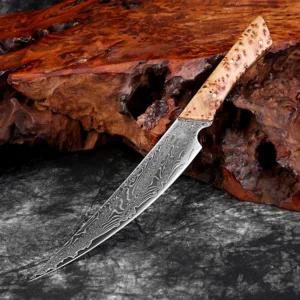
5-Inch Damascus Curved Utility Knife — Pakkawood Handle
$ 35 Add to cart -
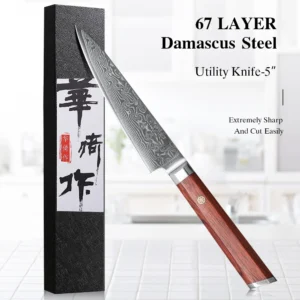
5-Inch Damascus Utility Knife — VG10 Core, Rosewood Handle
$ 31 Add to cart -
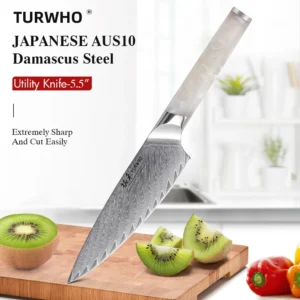
TURWHO 5.5-Inch Damascus Utility Knife — AUS-10 Core, Resin Handle
$ 39 Add to cart