Types of Knives Explained: What Each Knife Is Actually Used For
A knife’s shape follows its job. A curved belly lets a blade rock through vegetables; a flat, thin edge is built to slide under a fish’s skin without tearing it; a serrated edge saws through crust instead of crushing it. Once you can read a blade this way, most knife names stop being a vocabulary list and start making sense on sight. This guide covers 17 knife types organized by what they’re actually used for — kitchen, everyday carry, outdoor, hunting and fishing, utility, and specialty — with what each one does well, where it falls short, how it differs from the knife people most often confuse it with, and one real, published example of each.
Quick answer: Most knife types exist to solve one of three problems: cutting food efficiently (kitchen knives), carrying a compact, general-purpose blade day to day (EDC knives), or handling a specific outdoor or trade task like skinning game, filleting fish, or opening boxes (specialty and utility knives). Picking the right type starts with naming the Kitchen Knives
Kitchen Knives
actual task, not the blade shape you like the look of.
How the examples below were selected: Each type includes one real, currently-documented model with specifications drawn from the manufacturer’s own listing or a specialist retailer, not from hands-on testing by CityKnives. Prices are labeled “as listed” with the source, since retail prices change. Where a spec or price couldn’t be confirmed from a reliable source, it’s left out rather than guessed.
Knife Types at a Glance
| Category | Common types | Best for |
|---|---|---|
| Kitchen | Chef’s knife, santoku, paring knife, bread knife, boning knife | Food prep at home or professionally |
| Everyday carry (EDC) | Folding knife, fixed-blade EDC knife | Compact daily utility tasks |
| Outdoor | Survival knife, bushcraft knife, camping knife | Multi-purpose use away from a kitchen |
| Hunting and fishing | Hunting knife, skinning knife, fillet knife | Field dressing game and cleaning fish |
| Utility | Retractable utility knife, multi-tool | Packaging, trade, and quick fixes |
| Specialty | Cleaver, ceramic knife | Narrow, specific tasks |
Kitchen Knives
Kitchen knives are built around repeated, controlled cuts on a cutting board, which is why most of them have a straight or gently curved edge rather than a point-forward design. This section covers the essentials; a full breakdown of every kitchen knife type, including Western vs. Japanese styles, has its own dedicated guide.
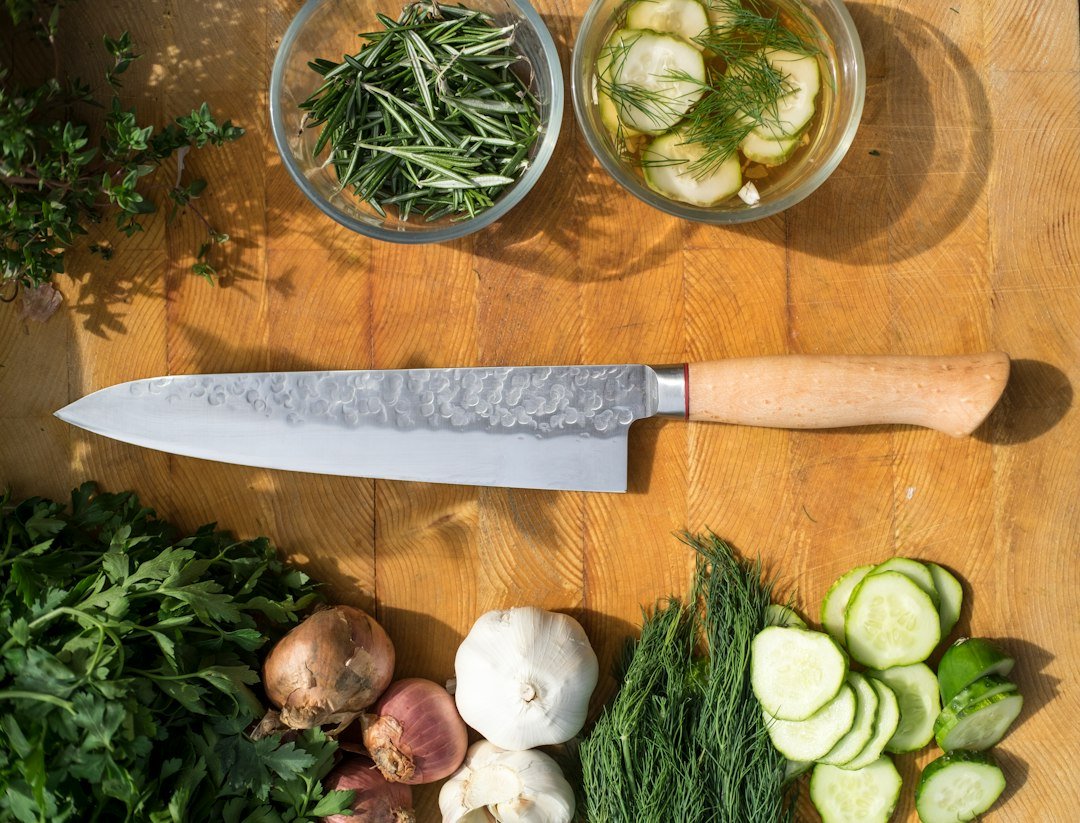
Chef’s Knife
- What it is: A broad, 8-to-10-inch blade with a curved belly that lets you rock the tip on the board while chopping — the closest thing to an all-purpose kitchen knife.
- Best for: Vegetables, proteins, herbs, and most everyday chopping and slicing.
- Not ideal for: Fine detail work like deveining shrimp or hulling strawberries — it’s too large and too curved for that kind of precision.
- Compared to a santoku: A chef’s knife handles a wider range of cutting motions thanks to its curve, at the cost of being longer and less maneuverable in a small hand.
- Example to check: Wüsthof Classic 8″ Chef’s Knife — forged X50CrMoV15 German stainless, HRC 58, 200mm blade, made in Solingen. Listed around $170 at KnifeCenter (checked September 2026). See on Wüsthof
Santoku
- What it is: Shorter and flatter than a chef’s knife, with a cutting edge that favors an up-and-down chop over a rocking motion.
- Best for: Cooks who want a lighter, more maneuverable everyday knife, or who find an 8-inch chef’s knife unwieldy.
- Not ideal for: The same broad rocking-cut versatility a chef’s knife offers — it trades that away for size and control.
- Compared to a chef’s knife: Shorter, flatter, and easier to control in a smaller hand, but less suited to a continuous rocking cut through larger produce.
- Example to check: MAC Superior Santoku 6.5″ — high-carbon molybdenum vanadium steel, HRC 61, 15° double bevel, made in Seki, Japan, 25-year warranty. Listed around $120 at Cutlery and More (checked September 2026). See at MAC Knife
Paring Knife
- What it is: A small, 3-to-4-inch blade for in-hand work — peeling, trimming, deveining — rather than cutting on a board.
- Best for: Fine, precise, in-hand tasks that don’t need real cutting force.
- Not ideal for: Anything requiring leverage, like breaking down a squash — a larger knife will out-perform it on force-heavy cuts.
- Compared to a chef’s knife: No real substitute for detail work, but a poor stand-in when the task needs weight and leverage instead of control.
- Example to check: Wüsthof Classic 3.5″ Paring Knife — forged X50CrMoV15 German stainless, HRC 58, 90mm blade. Listed around $95 at KnifeCenter (checked September 2026). See on Wüsthof
Bread Knife
- What it is: A long, serrated blade that saws through a tough crust without crushing the soft interior underneath.
- Best for: Bread, cake, and thin-skinned, soft produce like tomatoes.
- Not ideal for: Everyday chopping — a serrated edge doesn’t produce the clean, controlled slices a straight edge does.
- Compared to a plain-edge knife: A plain edge of the same length would compress a loaf before it cuts through the crust; the serration is what lets it saw rather than crush.
- Example to check: Tojiro Classic Bread Knife 215mm — VG10 stainless core, san mai construction, HRC around 60. See at Chef Knives to Go
Boning Knife
- What it is: A narrow, flexible blade designed to follow the contour of bones, cartilage, and joints when breaking down meat or poultry.
- Best for: Deboning and trimming meat and poultry with minimal waste.
- Not ideal for: General chopping — the flexibility that makes it good at following bone makes it a poor choice for anything needing a firm, controlled edge.
- Compared to a fillet knife: Similar job, different material — a fillet knife is usually thinner and more flexible still, built for fish skin rather than bone and cartilage.
- Example to check: Victorinox Fibrox 6″ Curved Boning & Fillet Knife — flexible stainless steel blade, ergonomic non-slip handle, widely recommended by professional kitchens. See boning knife listings
Everyday Carry (EDC) Knives
EDC knives are built for a completely different constraint than kitchen knives: they need to be small enough to carry comfortably every day, and versatile enough to handle whatever small cutting task comes up. A dedicated guide covers how to choose one in more depth; here’s the basic split.
Folding Knife
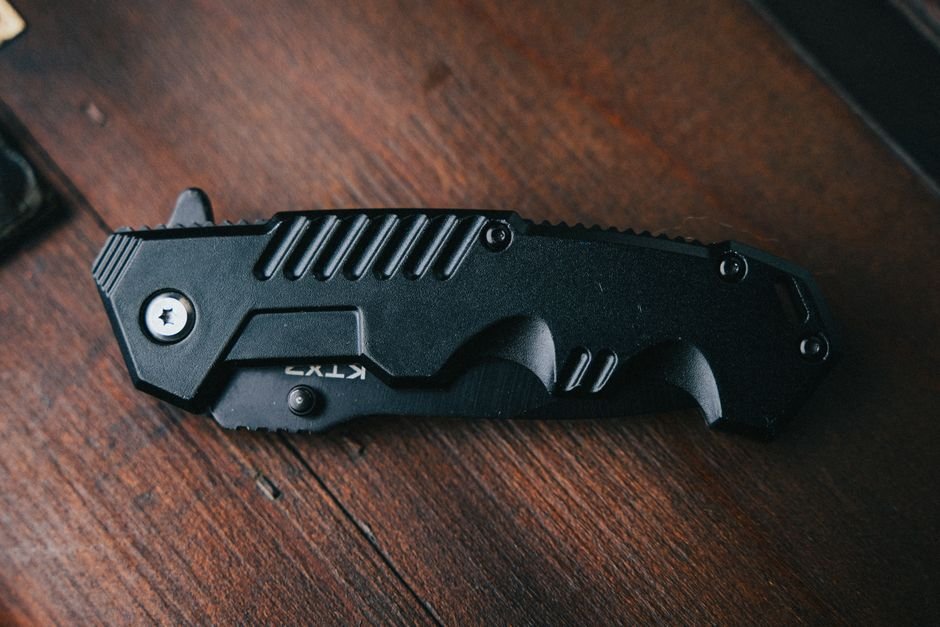
- What it is: A blade that pivots into the handle, making it compact and generally more pocket-friendly and discreet to carry than a fixed blade of the same length.
- Best for: Compact daily carry where low bulk matters more than raw durability.
- Not ideal for: Hard, repeated use — the lock and pivot mechanism is one more thing that can wear out or fail, and folders are harder to clean thoroughly since debris works into the pivot.
- Compared to a fixed-blade EDC knife: More compact and discreet to carry, but mechanically more complex and harder to keep fully clean.
- Example to check: Buck Knives 55 — a scaled-down folding pocket knife modeled after the Buck 110, weighs 1.9 oz, closed length 3-3/8″. See at Buck Knives
Fixed-Blade EDC Knife
- What it is: A single solid piece of blade and tang, with no moving parts to maintain or fail.
- Best for: Harder daily use and knives that need to be cleaned thoroughly and often.
- Not ideal for: Discreet carry — it’s bulkier than a folder of comparable blade length, which is why most daily carriers choose a shorter fixed blade than they would in a folding design.
- Compared to a folding knife: Stronger and easier to clean, but bulkier and less discreet to carry all day.
- Example to check: White River Knife & Tool Model 1 Caper — 440C steel, G10 handle, 3.39″ blade, 6.93″ overall, 3.74 oz. Listed around $105 MSRP. See at White River Knife & Tool
Outdoor Knives
Outdoor knives are chosen around durability and multi-purpose use rather than any single task — a knife dropped in wet or cold conditions still needs to work, which shapes almost every design choice in this category.
Survival Knife
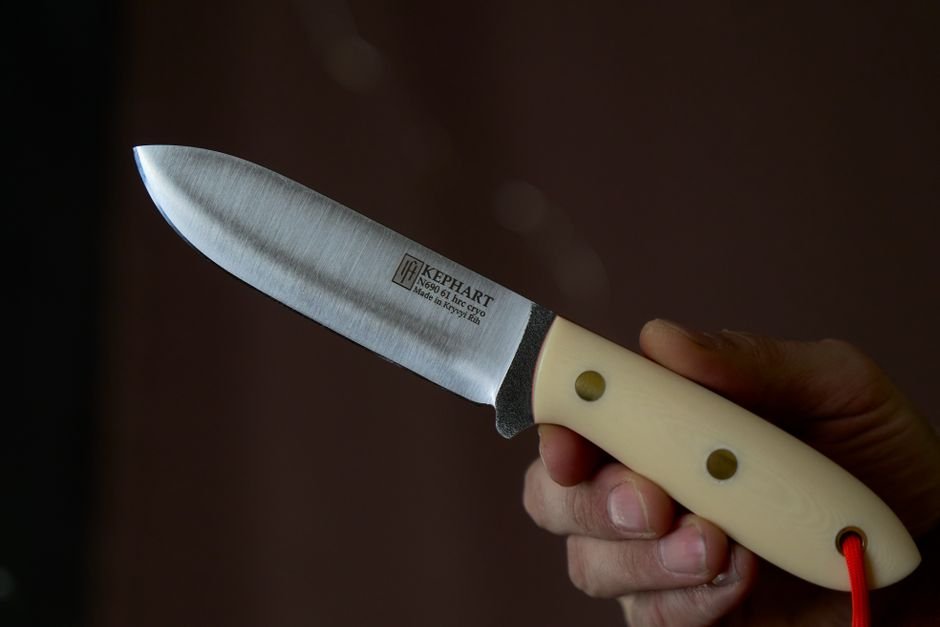
- What it is: A fixed blade, usually full tang, built to handle a wide range of unplanned tasks — batoning wood, basic food prep, rough cutting — reasonably well rather than any one task perfectly.
- Best for: General-purpose outdoor reliability when you can only carry one knife.
- Not ideal for: Fine carving or detail work — the size and ruggedness that make it durable also make it clumsy for precision tasks.
- Compared to a bushcraft knife: Larger and more rugged, prioritizing durability under hard use over the fine control a bushcraft knife is built for.
- Example to check: KA-BAR Becker BK2 Campanion — 1095 Cro-Van carbon steel, 5.25″ blade, 10.5″ overall, 1 lb, made in the USA. Listed around $75. See at KA-BAR
Bushcraft Knife
- What it is: A smaller, more controlled fixed blade built for repeated fine tasks like carving, notching, and food prep in the outdoors.
- Best for: Detail work in the field — carving, notching, feather sticks, food prep.
- Not ideal for: Heavy-duty tasks like batoning thick wood — it gives up the raw toughness of a larger survival knife for better control.
- Compared to a survival knife: Better control on fine, repeated tasks; less durable under the kind of hard abuse a survival knife is built to take.
- Example to check: Condor Bushcraft Bliss — 1075 carbon steel, 5″ blade, flat grind, easy to sharpen in the field. See at Condor Tool & Knife
Camping Knife
- What it is: A general term that overlaps heavily with both survival and bushcraft knives, but usually points to a knife sized and priced for occasional trip use rather than serious wilderness reliance.
- Best for: Car camping and occasional outdoor trips where a rugged multi-purpose blade is useful but hard-use durability isn’t the top priority.
- Not ideal for: Serious wilderness or survival use, where a purpose-built survival or bushcraft knife will hold up better.
- Compared to a survival knife: The main difference is intent and build quality, not a distinct blade shape — a camping knife is built for occasional use, not sustained hard use.
- Example to check: Gerber Strongarm — fixed blade, roughly 10 oz, available in several color/finish options. See at Gerber
Hunting and Fishing Knives
This category is defined by what happens after the catch — these knives are built for processing an animal or fish, not for general outdoor use.
Hunting Knife
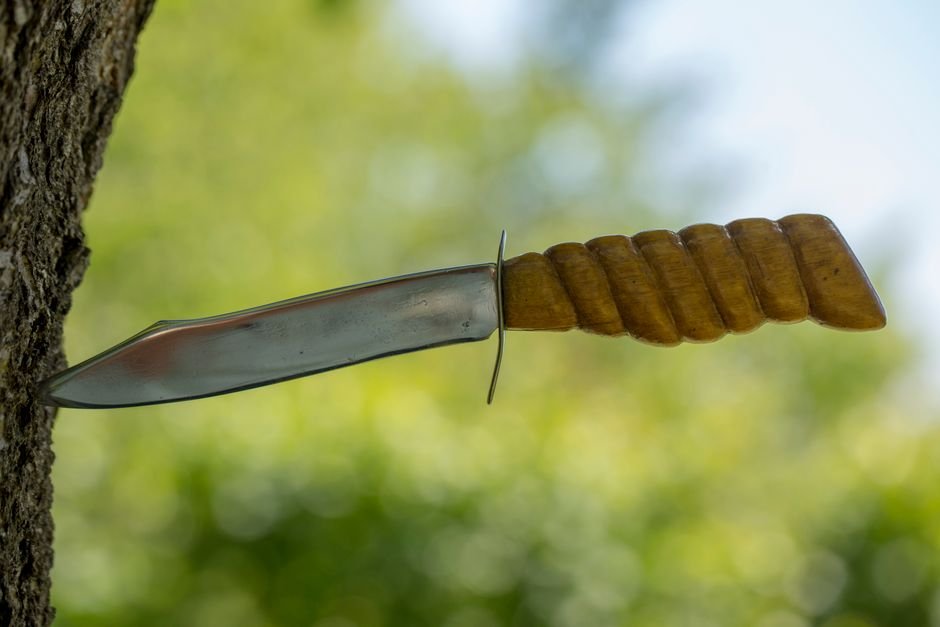
- What it is: Typically a shorter, sturdy fixed blade used for field dressing game — the initial cuts needed to process an animal in the field.
- Best for: The rougher initial cuts of field dressing, where durability matters more than a fine edge.
- Not ideal for: Detailed hide separation — it’s built with more durability than precision in mind.
- Compared to a skinning knife: A hunting knife handles the rougher initial cuts; a skinning knife’s curved blade is built specifically for separating hide cleanly afterward.
- Example to check: Buck Ranger 112 — 3″ blade, 7.25″ overall length, 5.6 oz. Listed under $70. See at Buck Knives
Skinning Knife
- What it is: A curved blade designed to separate hide from meat without puncturing the hide or nicking the meat underneath.
- Best for: Clean hide removal, especially on larger or multiple animals.
- Not ideal for: General field dressing cuts — the curved profile is purpose-built for skinning, not the broader initial breakdown of an animal.
- Compared to a hunting knife: The curve is functional, not stylistic — it lets the edge follow the contour of the animal in one continuous motion instead of the shorter strokes a straight edge requires for the same job.
- Example to check: White River Knife & Tool Model 1 Skinner — CPM S35VN steel, HRC 58–60, 3″ blade, 7″ overall, 3.5 oz. Listed around $160 MSRP. See at White River Knife & Tool
Fillet Knife
- What it is: A thin, highly flexible blade built to follow a fish’s spine and slide just under the skin with minimal waste.
- Best for: Cleaning and filleting fish with minimal meat loss.
- Not ideal for: Anything needing a stiff, controlled edge — the flexibility that makes it good at following a fish’s spine makes it a poor general-purpose blade.
- Compared to a kitchen boning knife: Similar job, but thinner and more flexible still, since fish flesh is far more delicate than most meat a boning knife handles.
- Example to check: Kershaw 7.5″ Narrow Fish Fillet Knife — 420J2 stainless steel, trailing point, flexible blade. Listed around $19. See at Kershaw
Utility Knives
“Utility knife” usually means something more specific in a trade or packaging context than it does in a kitchen — it’s about quick, replaceable cutting power rather than food prep or outdoor use.
Retractable Utility Knife
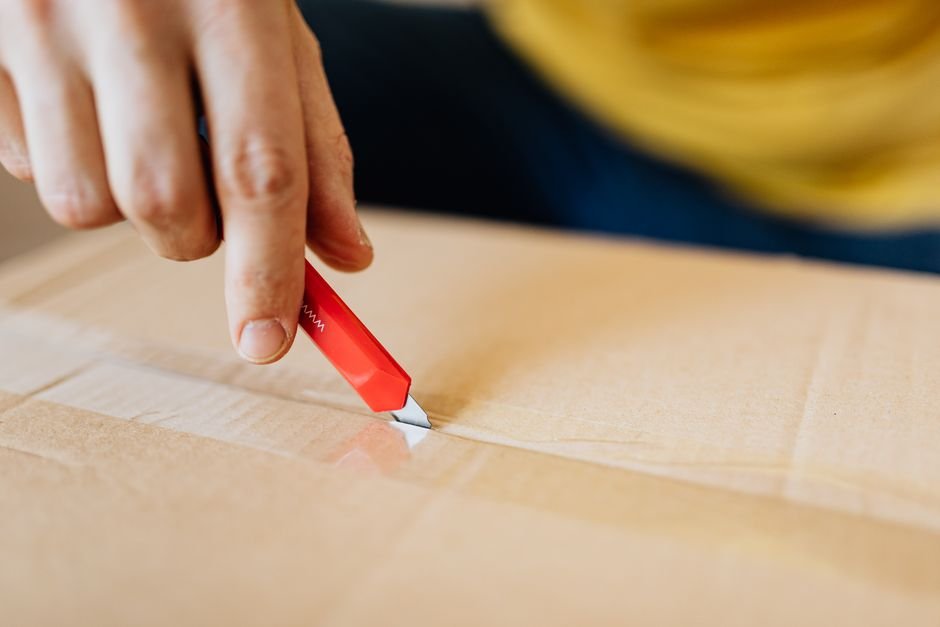
- What it is: A blade, often a replaceable snap-off or standard trapezoid blade, that retracts into a handle for safe storage.
- Best for: Boxes, packaging, and light material cutting where the blade gets replaced often rather than sharpened.
- Not ideal for: Anything requiring edge retention or fine control — these are built for cheap, frequent blade swaps, not precision.
- Compared to a multi-tool: Purpose-built for cutting alone, with a sharper and more controlled blade than a multi-tool’s knife function, but none of a multi-tool’s other capabilities.
- Example to check: DeWalt Retractable Utility Knife (DWHT10295) — angled retractable design, overmolded grip, on-board blade storage, spring-load carabiner clip. See at DeWalt
Multi-Tool
- What it is: Not a single knife but a folding tool that includes a knife blade alongside pliers, screwdrivers, and similar implements.
- Best for: Occasional, varied small tasks where carrying several separate tools isn’t practical.
- Not ideal for: Serious daily cutting use — the knife blade is a compromise, sharing space and design priorities with the tool’s other functions.
- Compared to a dedicated EDC knife: A dedicated knife will almost always out-cut a multi-tool’s blade of similar size, since the multi-tool’s knife isn’t the primary design focus.
- Example to check: Leatherman Skeletool CX — 2.6″ straight blade, 154CM steel, closed length 4″, weighs 5 oz, 25-year warranty. See at Leatherman
Specialty Knives
A smaller group of knives built around one narrow task or one specific material, rather than a broad use case.
Cleaver
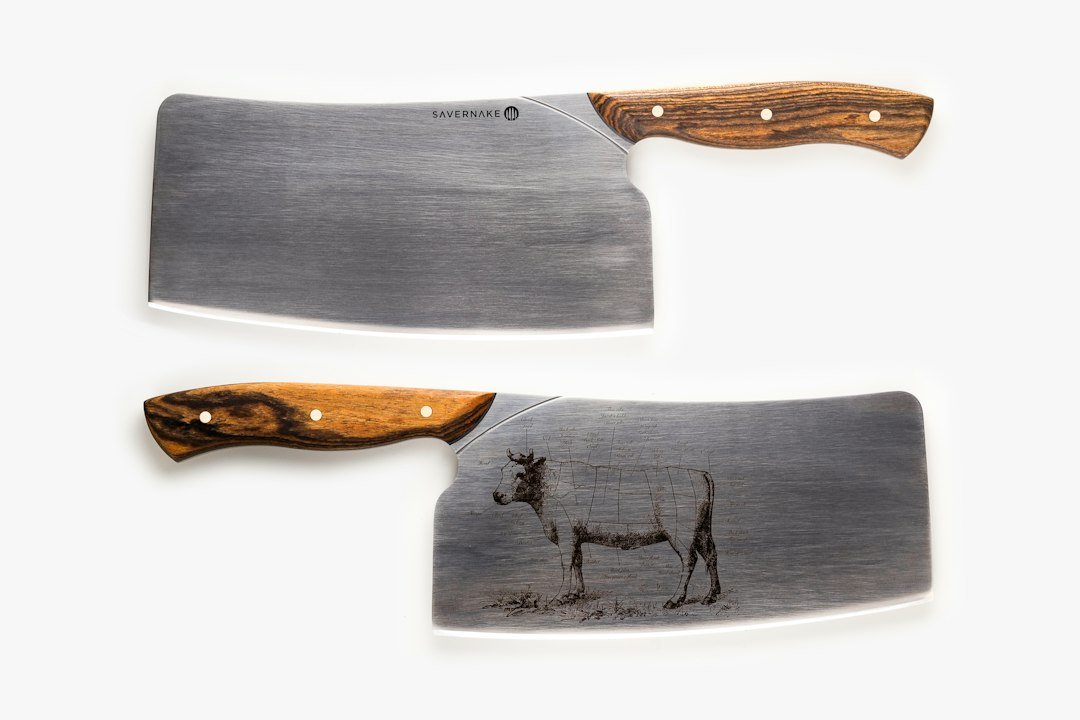
- What it is: A heavy, rectangular blade that relies on weight and blade width rather than a fine edge to get through bone and joints in one motion.
- Best for: Cutting through bone, joints, and cartilage in one controlled motion.
- Not ideal for: Delicate, precise slicing — the same weight that makes it effective on bone makes it clumsy for fine work.
- Compared to a chef’s knife: Far more force-effective on bone and joints, but a poor substitute for a chef’s knife’s precision on everyday slicing.
- Example to check: Winco Cleaver Knife (Model KC-301), 8″ — high carbon stainless steel, heavy-duty blade built for cleaving meat and joints. Listed around $13 at Home Depot. See at Home Depot
Ceramic Knife
- What it is: Made from a hard ceramic material rather than steel, which lets it hold an edge far longer between sharpenings than most steel knives.
- Best for: Light-duty slicing where long-lasting sharpness matters more than durability under stress.
- Not ideal for: Any task involving bone, frozen food, or twisting/prying motion — ceramic is brittle and can chip or snap under lateral stress in a way steel generally won’t.
- Compared to a steel chef’s knife: Holds an edge far longer between sharpenings, but is more fragile and can’t be resharpened the same way at home.
- Example to check: Kyocera Revolution Series 6″ Ceramic Chef’s Knife — zirconia ceramic blade, rust-proof and acid-resistant. See at Kyocera
Construction methods like Damascus patterning are a separate axis from all of this — a chef’s knife, a santoku, and a hunting knife can each be made with a Damascus-patterned blade, and the pattern changes the look and, depending on the steel involved, some performance characteristics, but not the knife’s basic type or job. A dedicated guide covers what a Damascus pattern actually tells you about a knife.
How to Figure Out Which Knife You Actually Need
Most buying mistakes in this category come from picking a knife type based on appearance or reputation rather than the actual task. A few practical checks:
- Name the task first, then the knife. “I need something for field dressing deer” points to a hunting knife; “I need something I can carry in a pocket every day” points to EDC — starting from the task avoids buying a knife that looks the part but doesn’t fit the job.
- One knife rarely does everything well. A survival knife can technically slice bread and a chef’s knife can technically baton kindling, but both will do those jobs worse than the knife actually built for them. Expect to own more than one type if your tasks genuinely span categories.
- Match the edge to the material, not just the task. A serrated edge for crust, a curved edge for skinning, a flexible thin blade for fish — the edge and blade shape usually explain themselves once you know what surface or material the knife needs to move through.
- Fixed vs. folding is a real trade-off, not a style choice. A fixed blade is stronger and easier to clean; a folding blade is more compact and discreet. Neither is objectively better — it depends on how and where the knife will actually be carried or used.
Frequently Asked Questions
What’s the difference between a chef’s knife and a santoku?
Both are general-purpose kitchen knives, but a chef’s knife has a longer, more curved blade built for a rocking cut, while a santoku is shorter and flatter, favoring an up-and-down chop. A santoku is generally easier to control in a smaller hand; a chef’s knife handles a wider range of cutting motions.
Do I need a separate hunting knife and skinning knife?
Not necessarily. Many hunters use one knife for both field dressing and skinning, especially for smaller game. The two are optimized for slightly different motions — straight cuts versus a continuous curved stroke — so a dedicated skinning knife becomes more useful as the volume of animals processed goes up.
Is a multi-tool a good substitute for a dedicated EDC knife?
For occasional light use, yes. For a knife that gets used often or needs to hold an edge well, a dedicated EDC knife is usually the better choice, since a multi-tool’s blade is built to share space with its other functions rather than to be the best possible knife on its own.